Sending a social media screenshot to a supplier and asking for a price is the most common mistake in apparel sourcing. Good pricing needs clear technical data, not just visual inspiration. This guide breaks down the exact specs you need to get a reliable clothing manufacturing quote. We will look at the direct factors that drive unit costs. You will also learn how to move from rough estimates to final production pricing without paying surprise fees.
Why Asking “How Much Does This Cost?” With Just a Photo Ruins Your Quote
Asking for a garment production cost using only a photo is like asking a builder the price of a house after showing them a picture of a front door. A simple photo tells the factory nothing about fabric density, inside seams, or hidden trims. When an estimator gets only a picture, the financial risk is high. The factory then uses defensive pricing to protect its profits against unknown problems.
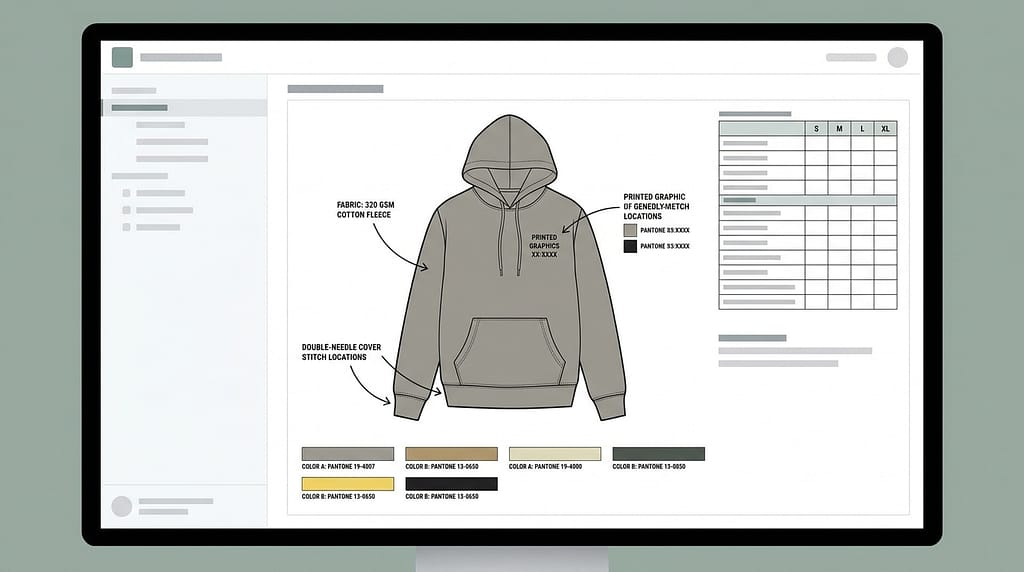
If a hoodie looks oversized in a photo, the estimator plans for 2.2 meters of fabric instead of the usual 1.8 meters. They will assume you need complex stitching, like a double-needle cover stitch instead of a basic overlock seam, because they cannot see the inside of the garment.
According to Los Angeles-based apparel consultancy Plucky Reach, 80% of the first-time founders they work with initially submit sketches or inspiration photos rather than formal tech packs. Without clear technical papers, the factory has to guess how to make the item. Because factories add safety margins to cover this risk, vague details add a 15% to 25% surcharge to your first quote. The brand ends up paying for the factory’s safety net before anyone cuts a single piece of fabric.
What Information You Must Provide to Get a Clothing Manufacturing Quote
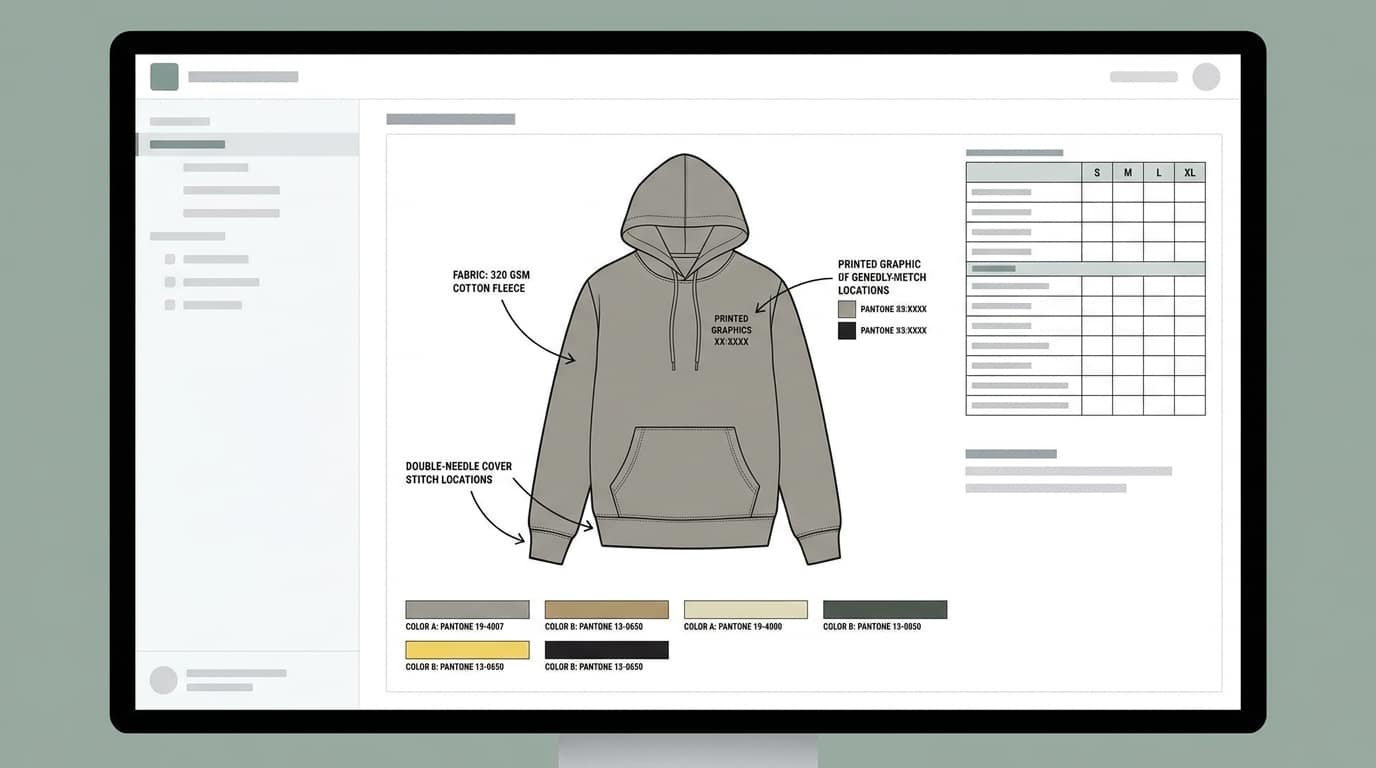
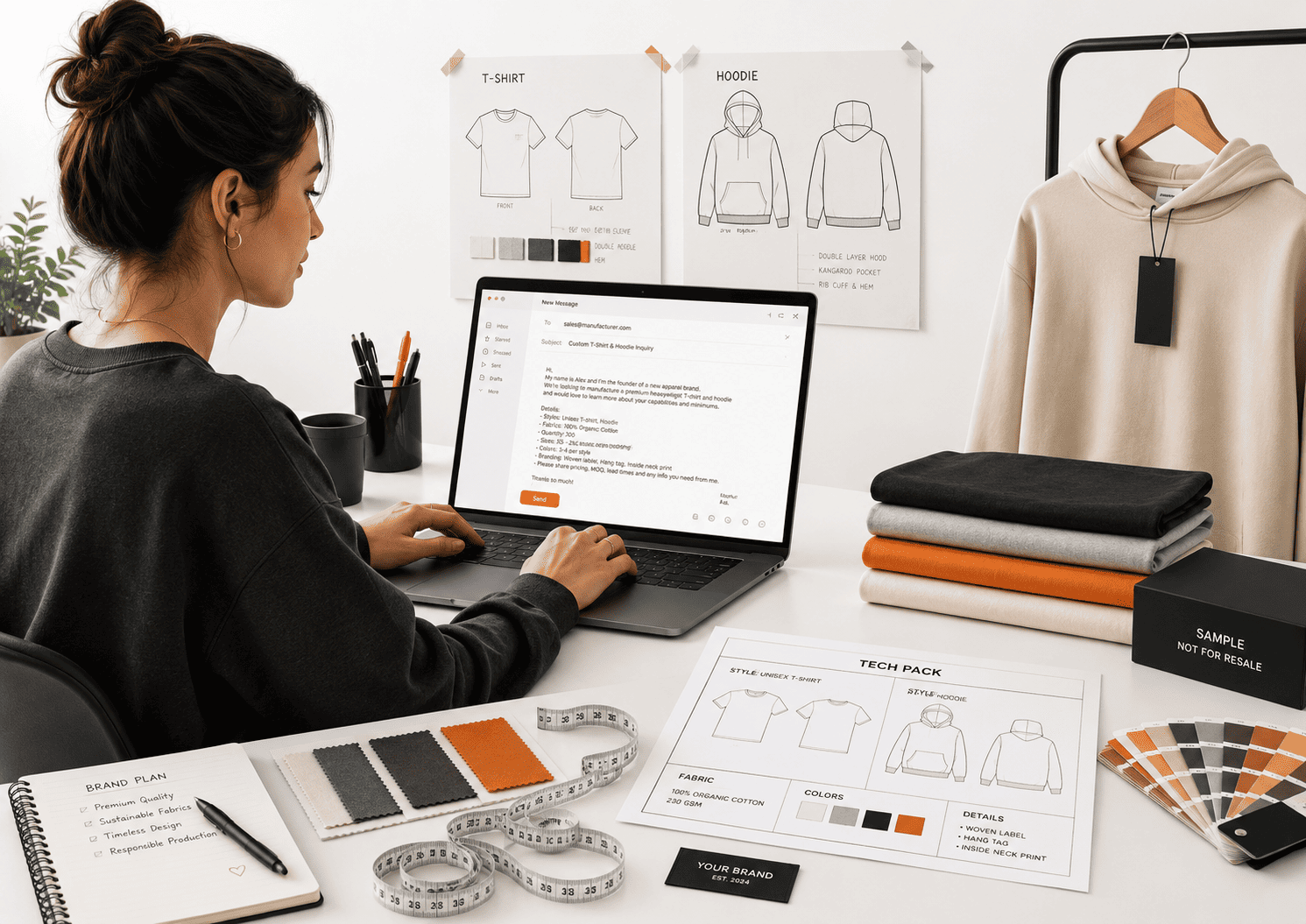
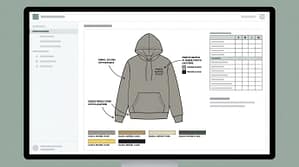
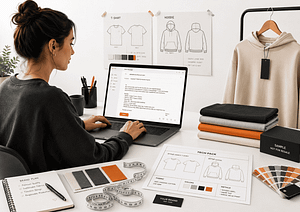
A tech pack serves as the master blueprint on the factory floor. It stops spoken misunderstandings and gives the exact numbers needed for an accurate apparel manufacturing quote. Factories use this document to figure out exact fabric usage, total sewing time on the line, and trim needs. Brands that use a tech pack have an 82% probability of entering bulk production in 2 or fewer sampling rounds. Without a tech pack, brands average 4.5 sampling rounds. With a proper tech pack, that average drops down to just 1.8 rounds.
Essential Information for a Quote Request
- Detailed technical flat sketches showing front, back, side, and internal construction views.
- Comprehensive bill of materials listing specific fabric compositions, target weights, and designated supplier codes.
- Complete size charts featuring graded measurements for every specific point of measure across the entire size run.
- Technical trim specifications detailing zipper tape materials, button dimensions, elastic tension, and drawcord lengths.
- Precise decoration instructions including graphic placement measurements, artwork scale, and specific application methods.
- Standardized labeling and packaging requirements including polybag thickness, folding methods, and barcode placement.
- Target order volume separated by exact style, colorway, and size breakdown ratios.
- Required delivery terms, destination port, and target completion timeline.
How Garment Grading Affects Manufacturing Quote Accuracy
Garment grading is the mathematical method used to turn a base size pattern into a full range of sizes. This process does not just enlarge every part evenly. Different parts of the garment grow at different rates based on set grading rules. For instance, a small might grow two inches in the chest to make a medium, but a large might need a two-and-a-half-inch jump to reach an extra-large. These grade rules directly control marker efficiency.
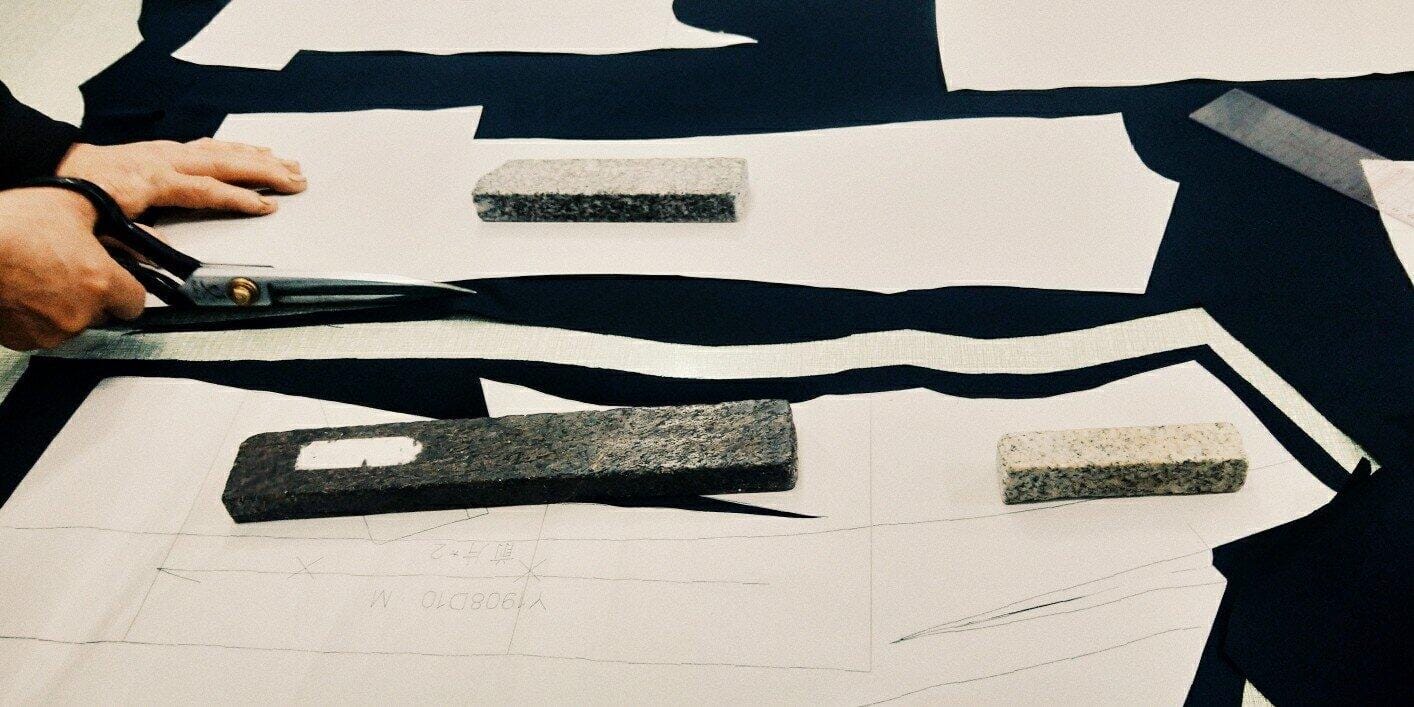
A marker is a digital layout of pattern pieces arranged on a roll of fabric to reduce scrap. If a factory lacks graded specs, the pattern department cannot make a test marker. Without an accurate marker, the factory cannot tell how much fabric your full size run will use. In 2024, 60% of Los Angeles sample rooms rejected quote requests that lacked graded specs. When factories calculate costs using only a medium base size, the material estimate is flawed from the start. Brands that skip this step pay extra fees during development. In fact, founders with incomplete files pay $150 to $400 extra in revision fees just to fix their paperwork before getting a real price.
The Anatomy of a Garment Production Cost: What Drives Your Price?
A clothing manufacturing cost adds up raw materials, direct labor, factory overhead, and profit margins. Understanding these pieces helps brands design products that hit their target retail profits. Fabric makes up 50% to 70% of the total landed garment cost. The rest covers trims, cutting, sewing, graphics, and final packing.
Labor costs, known as cut-make-trim, depend on the standard allowed minutes needed to sew the garment. A basic jersey t-shirt takes around twelve minutes of sewing time, but a lined technical jacket with taped seams can take eighty minutes. Every extra panel, hidden pocket, or special stitch adds assembly time and lowers the factory’s daily output. Print methods also change your unit costs quickly. Screen printing requires coating physical mesh screens with emulsion, exposing the art, washing the stencil, and lining up the screens on a press. This setup takes hours regardless of order size. Embroidery costs go up directly with total stitch count and machine run time.
Impact of Fabric GSM and Tolerances on Cost Variances
Fabric weight is measured in grams per square meter, and it controls both the drape of the garment and the way mills sell material. Mills sell knit fabrics by weight, usually billing in kilograms. Cutting rooms, however, use fabric by length, placing pattern markers along linear meters or yards. Converting purchased weight into usable length depends entirely on the fabric GSM. A higher fabric GSM means the cloth is heavier, which gives you fewer linear meters per kilogram. This heavier weight means you can cut fewer garments from each roll you buy.
| Metric / Benchmark | Operational Value | Impact on Manufacturing & Quoting |
|---|---|---|
| Fabric Cost Ratio | 50% to 70% | Fabric comprises the majority of landed costs, making weight errors highly impactful. |
| Incomplete Spec Fee | $150 to $400 | Factories charge extra revision fees to buyers submitting packets without full details. |
| Spec Ambiguity Surcharge | 15% to 25% | Manufacturers increase initial quote prices to hedge against unstandardized designs. |
| Graded Spec Rejection Rate | 60% | Sample rooms reject quote inquiries outright when size grading charts are missing. |
| Tech Pack Adoption Impact | 82% | Tech pack usage secures sampling approval within 2 or fewer review rounds. |
| Average Sampling Iterations | 1.8 rounds | Standardized technical blueprints reduce iteration cycles compared to 4.5 rounds for rough sketches. |
| Sample Production Expense | £100 to £250 | Prototyping costs scale directly with garment construction complexity prior to bulk production. |
| Cut-and-Sew Factory MOQ | 150 to 300 units | Typical per-colorway minimums define baseline factory scheduling thresholds. |
The global standard tolerance for fabric GSM is +/-5%. This small swing creates a moving cost variable that many brands miss. If a factory quotes your job based on 200 GSM fabric, but the bulk rolls arrive at 210 GSM, the factory will get less length out of the shipment. This drop in length immediately raises the fabric cost for every single garment. Brands should set clear weight tolerance limits in their contracts to keep fabric shifts from hurting their profit margins during cutting.
Order Quantity and Clothing MOQ: The Math Behind the Unit Price
Factories do not price single garments; they price production runs. Every manufacturing run carries fixed setup costs no matter how many units you order. These fixed jobs include setting up machines, printing markers, laying out fabric, burning print screens, and setting up inspection lines. When you place a large order, the factory spreads these fixed costs over thousands of units, which lowers the single garment production cost. When you place a small order, those setup costs make up a huge part of each item’s price.
| Metric / Cost Item | Target Value / Standard | Direct Impact on Production |
|---|---|---|
| Fabric Cost Share | 50% to 70% of landed cost | Dominates primary garment budgeting and requires exact material usage estimates. |
| Fabric GSM Tolerance | +/-5% standard variation | Protects against weight discrepancies between pre-production swatches and bulk yardage. |
| Ambiguity Price Surcharge | 15% to 25% on initial quote | Applied by factories when technical specifications are vague or missing key dimensions. |
| Incomplete Spec Revision Fee | $150 to $400 per revision | Incurred by brands when engineering documents lack graded sizing parameters. |
| Private Label T-Shirt Cost | €4.50-€9 per piece (50-200 units) | Enables lower upfront capital investment with accelerated 2-4 week lead times. |
| Custom Cut & Sew T-Shirt Cost | €7-€18 per piece (100-500+ units) | Requires higher entry capital and an extended 16-24 week total turnaround. |
| Sample Development Cost | £100 – £250 per prototype | Dictates pre-production sampling budgets based on complex pattern requirements. |
| Tech Pack Sampling Efficiency | 1.8 rounds (vs. 4.5 without) | Decreases sample revision iterations and secures an 82% production-ready rate in 2 rounds or fewer. |
Most cut-and-sew shops in Los Angeles set a standard clothing MOQ of 150 to 300 units per color. This volume gives the factory enough scale to run a sewing line smoothly without stopping to rethread machines. For brands testing new markets, flexible setups now help bridge the gap between samples and bulk production. A flexible clothing moq starts at 150 pcs per style/color. This is the lowest volume where a factory can cut stacked fabric and run a continuous sewing line without losing money on setup. If you ask for quotes below this volume, you will get sample-room rates, which are much higher than bulk production prices.
Custom Clothing Manufacturer vs. Private Label: Pricing Differences
Brands must decide between making patterns from scratch or using ready-made blanks. A custom clothing manufacturer builds garments from your original patterns, sourcing raw materials, making patterns, and handling custom dye jobs. A private label clothing manufacturer supplies ready-made styles that you can rebrand with your own neck tags, prints, and colors. The costs and timelines for these two paths are very different.
| Production Route | Starting Cost per Unit | Typical Lead Time | Design Control |
|---|---|---|---|
| Private Label | €4.50-€9 | 2-4 weeks | Low to moderate |
| Custom Manufacturing | €7-€18 | 16-24 weeks | Complete |
According to sourcing data published by Portugal Clothing Factory across its network of Portuguese manufacturers, private label T-shirts typically range from €4.50–€9 per unit. This route skips pattern fees, removes custom fabric minimums, and gets your product to market fast. Private label orders take 2-4 weeks because the factory has already knitted the fabric, tested the patterns, and only needs to add your branding. Custom cut-and-sew T-shirts start at €7-€18 each for orders of 100-500+ units. This higher price pays for the development work needed to draft a new pattern and buy custom materials. Custom production takes 16-24 weeks from start to finish. That longer timeline covers several sample rounds, lab dips for custom colors, and physical fit tests.
Estimated Quotes vs. Final Confirmed Prices
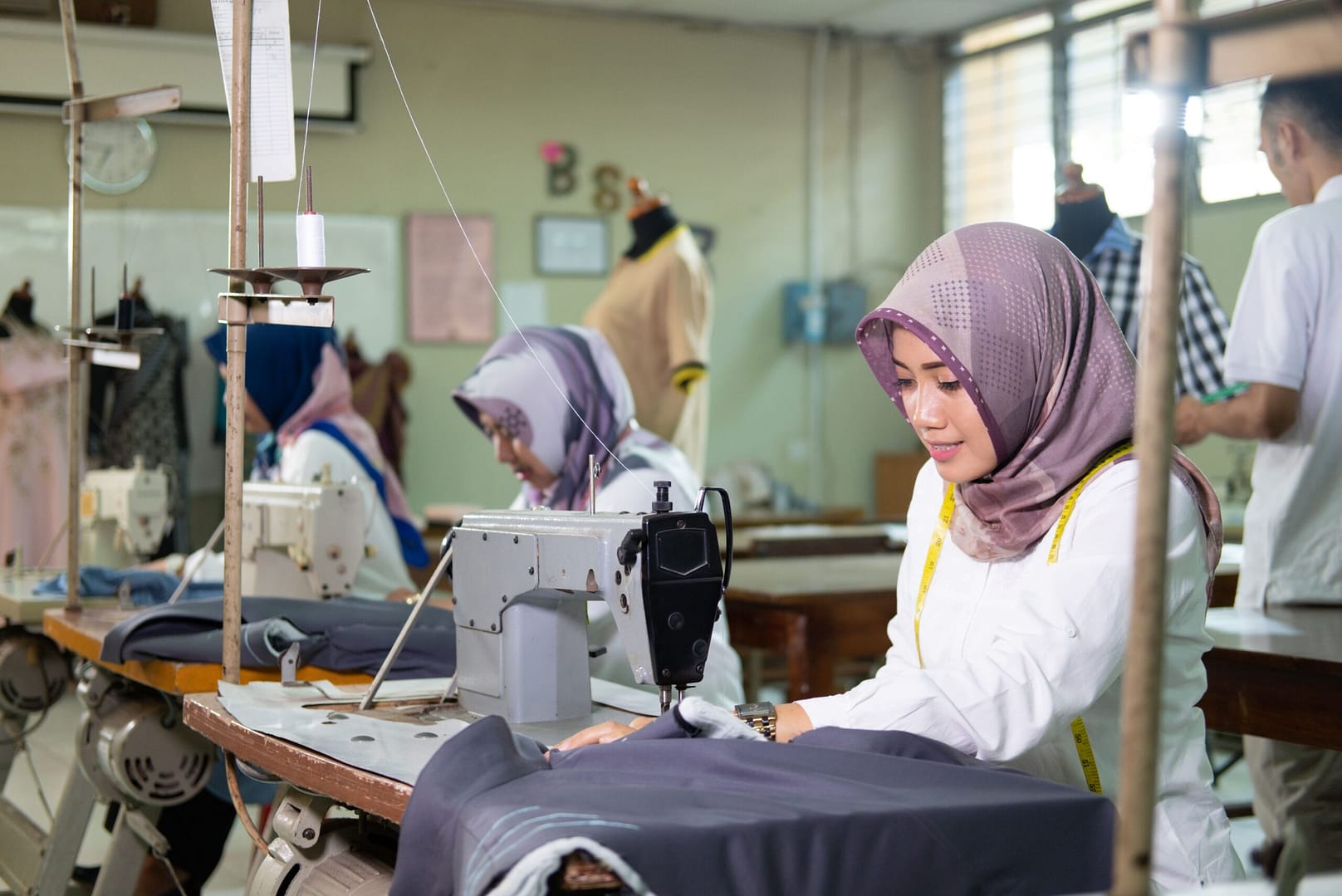
Your first factory price is only an estimated quote based on the flat data in your tech pack. It shows the factory’s best guess for material yields and labor time before physical work starts. The factory locks in the final confirmed price only after you approve the pre-production sample. Making a real sample uncovers hidden problems that technical drawings cannot show.
The average sample cost is £100 – £250 depending on complexity. During this prototyping stage, the factory washes the garment to check fabric shrinkage, tracks exact sewing times, and spots assembly issues. If a flatlock seam pulls the fabric the wrong way, the factory will suggest an easier finish and update the labor cost. In the end, the sample cost protects you against costly mistakes during bulk manufacturing. The final bulk price locks in once you approve the prototype and the factory confirms the assembly steps on the floor.
How to Read Quotes and Vet Manufacturers (Reddit Insights)
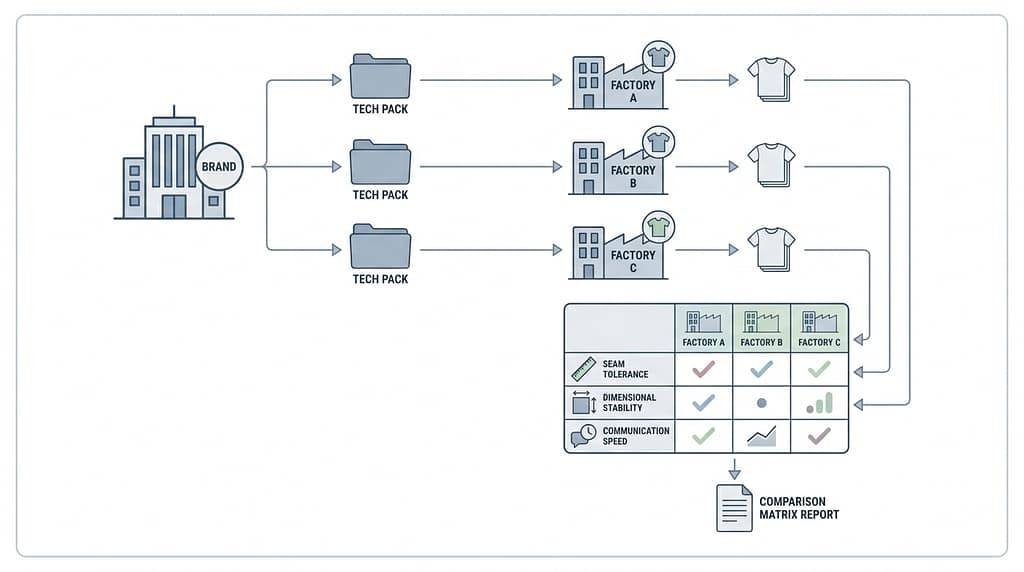
Discussions among clothing founders on Reddit show how widely development and manufacturing costs can vary depending on sampling, pattern development, grading, MOQ, and production location. To review a clothing manufacturer quote properly, look beyond the final unit price to see what services the factory actually includes. Factories with the lowest initial prices often leave out key steps like polybag packing, quality checks, or garment steaming. On the other hand, suppliers that refuse to lower their prices during negotiations are often protecting their production standards. They know that cutting the price would mean using thinner fabrics, reducing stitch counts, or skipping shrinkage tests. The safest way to test factories is to develop samples with several suppliers at the same time.
Steps to Vet Manufacturers with Identical Specs
- Distribute the exact same technical documentation and vector artwork to three separate production facilities simultaneously.
- Request itemized cost breakdowns separating raw materials, direct labor, decoration application, and one-off setup fees.
- Commission a physical prototype from each facility using identical raw materials and trim specifications.
- Measure the finished prototypes against the original point of measure charts to calculate the dimensional variance and cutting accuracy.
- Evaluate the internal seam finishing, thread tension consistency, and print opacity across all three physical samples.
- Assess the communication latency, English proficiency, and technical problem-solving ability demonstrated by the merchandising team during the development cycle.
Your Apparel Manufacturing Quotation Checklist
Sending complete technical files on day one lets the factory skip rough guesses and calculate real costs immediately. When an estimator gets a clean packet, they can price the job right away instead of spending weeks emailing you for missing measurements.
The Ultimate Quote Request Checklist
- Comprehensive tech pack including graded measurement charts for the entire intended size run.
- Complete bill of materials with designated fabric compositions, target weights, and acceptable tolerance levels.
- Vector artwork files formatted for all required screen prints, embroideries, or heat transfers with exact scale measurements.
- Exact target order quantity separated by specific colorways and precise size breakdown ratios.
- Detailed labeling instructions including neck tags, legal care labels, and placement measurements.
- Packaging specifications including polybag thickness, warning text requirements, and barcode placement.
- Target delivery timeline and required shipping terms for the final destination port.
- Target unit price range to establish immediate financial feasibility before sampling begins.
Ready for an Accurate Quote? Send Your Tech Pack to Valtin Apparel
Getting an accurate clothing manufacturer quote takes clear technical notes and a reliable partner who can build your designs without surprise fees. Valtin Apparel works as a full-service custom clothing manufacturer, handling every step from initial pattern design through bulk sewing and shipping. The company supports flexible order sizes, custom fabric sourcing, and strict quality checks with transparent pricing. If you have complete tech files or physical reference garments, send them directly to the Valtin Apparel team to start your pricing review and move into sampling.